 Skip to content


Dogs are loyal companions, but every breed has its own temperament, energy level, training needs, and behavior tendencies. When people talk about the most aggressive dog breeds or least aggressive dog breeds, it is important to remember that aggression is not based on breed alone. Training, socialization, health, environment, and owner responsibility all play a major role.
This guide covers commonly discussed aggressive and non-aggressive dog breeds, what makes behavior vary, and when to seek help if your dog shows signs of aggression.
Table of Contents
Understanding Dog Aggression
Aggression in dogs can appear as growling, snapping, lunging, biting, guarding, or intense reactivity. It may be caused by fear, poor socialization, pain, territorial instincts, anxiety, past trauma, or lack of training.
Breed can influence tendencies, but it does not guarantee behavior. A well-trained and socialized dog from a strong guarding breed may be calm and reliable, while a poorly socialized small dog may become reactive or defensive.
If you are dealing with difficult behavior, this guide on how to train an aggressive dog can help you understand safer next steps.
Most Aggressive Dog Breeds to Know
Some breeds are often described as more prone to reactive, defensive, territorial, or protective behavior. This does not mean every dog from these breeds will be aggressive. It means they may require stronger training, structure, and socialization.

Chihuahua
Chihuahuas are tiny dogs with bold personalities. Because of their small size, people sometimes overlook their need for proper training and socialization. Without boundaries, they may become fearful, defensive, or reactive toward strangers and other animals.
Chihuahuas typically stand around 6 to 9 inches tall and weigh about 3.3 to 6.6 pounds. They are alert, expressive, and deeply bonded to their owners. With consistent training, socialization, and gentle handling, they can become confident and affectionate companions.
Doberman Pinscher
The Doberman Pinscher is a sleek, powerful working dog originally developed in Germany. Dobermans are known for loyalty, intelligence, alertness, and protective instincts.
They typically stand 24 to 28 inches tall and weigh around 60 to 88 pounds. Their short coat may come in black, blue, fawn, or red with rust markings. Because they are strong, energetic, and highly intelligent, Dobermans need structured training, early socialization, and regular mental stimulation.
For related care tips, read Do Dobermans Get Cold?
Rottweiler
Rottweilers are large, confident dogs originally used for herding, guarding, and working roles. They usually weigh between 85 and 130 pounds and stand around 22 to 27 inches tall.
Rottweilers are known for being devoted, alert, courageous, and protective. They can be excellent family dogs when raised with proper training, socialization, and leadership. However, because of their strength and guarding instincts, they are best suited for responsible owners who can provide structure and consistency.
If you are comparing family-friendly breeds, read our guide to dog breeds for families with children.
Least Aggressive Dog Breeds
Some breeds are often known for calmer, gentler, and more people-friendly temperaments. However, even low-aggression breeds still need training, socialization, exercise, and responsible care.
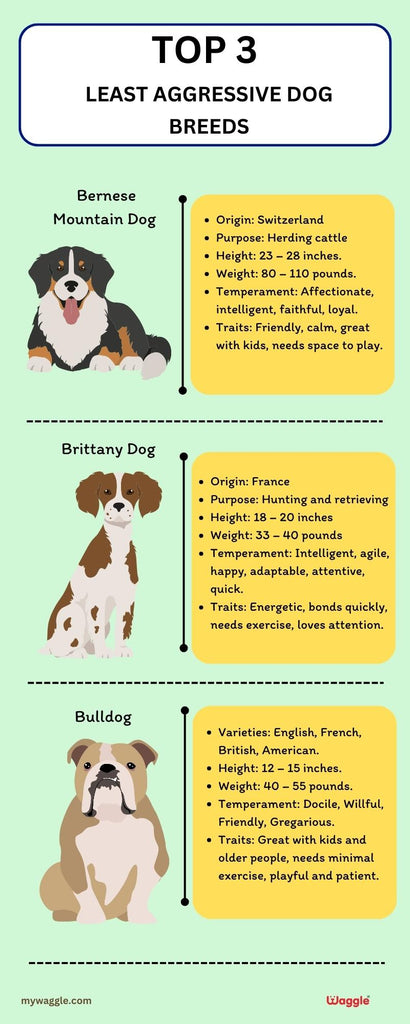
Bernese Mountain Dog
Bernese Mountain Dogs are known for their loyalty, calm nature, and affectionate personality. They are large, sturdy dogs that often do well with families and children when properly trained.
They typically stand 23 to 28 inches tall and weigh around 80 to 110 pounds. Their temperament is often described as faithful, intelligent, affectionate, and gentle. Because of their size and coat, they do best in homes with space, regular grooming, and attentive care.
Also Read: 8 most intelligent dog breeds in the USA
Brittany Dog
Brittanys, formerly known as Brittany Spaniels, are energetic, friendly, and eager-to-please dogs. Originally bred for hunting and retrieving, they are active companions that need plenty of exercise and mental stimulation.
They usually stand 18 to 20 inches tall and weigh around 33 to 40 pounds. Brittanys are affectionate, intelligent, agile, and adaptable. They are generally low in aggression but may become anxious or restless without enough attention and activity.
Learn more in our guide to Brittany Spaniel breeds.
Bulldog
Bulldogs are known for their wrinkled faces, sturdy bodies, and calm personalities. Despite their serious expression, many Bulldogs are friendly, patient, playful, and affectionate.
They typically stand 12 to 15 inches tall and weigh around 40 to 55 pounds. Bulldogs often do well in family homes and can be a good fit for people who want a lower-energy companion. Because they can be sensitive to heat and breathing issues, they need careful temperature management and moderate activity.
For more easygoing breed ideas, explore apartment friendly dog breeds.
What to Do About Aggressive Behavior
If your dog shows signs of aggression, do not ignore it or try to handle serious cases alone. Aggression can escalate and may lead to injury, fear, or legal issues if not addressed properly.
Start by consulting your veterinarian to rule out pain, illness, or medical causes. Then work with a certified dog trainer or veterinary behaviorist who uses humane, reward-based methods.
Avoid punishment-based training, as it can increase fear and worsen aggressive behavior. Focus on safety, management, desensitization, positive reinforcement, and professional guidance.
FAQs
What are the most aggressive dog breeds?
Breeds often discussed for stronger reactive or protective tendencies include Chihuahuas, Doberman Pinschers, and Rottweilers. However, aggression depends heavily on training, socialization, health, and environment.
What are the least aggressive dog breeds?
Bernese Mountain Dogs, Brittanys, and Bulldogs are often described as gentle or low-aggression breeds. Still, every dog needs training, socialization, and proper care.
Is dog aggression based only on breed?
No. Breed can influence temperament, but aggression is shaped by genetics, socialization, training, environment, fear, pain, and owner handling.
Can aggressive dogs be trained?
Yes, many aggressive or reactive dogs can improve with professional help, behavior modification, positive reinforcement, and proper management.
When should I get help for dog aggression?
Seek help immediately if your dog growls, snaps, bites, lunges, guards resources, reacts intensely to people or animals, or shows sudden behavior changes.
Are small dogs aggressive?
Small dogs can show aggressive behavior too, often because of fear, poor boundaries, or lack of training. Their size does not remove the need for socialization and structure.
Final Thoughts
Labeling a breed as aggressive or non-aggressive can be misleading. Every dog is an individual, and behavior depends on many factors. The best approach is to choose a breed that fits your lifestyle, provide early training and socialization, and address behavior concerns before they escalate.
If you notice aggressive behavior in your pet, speak with your veterinarian or a qualified behavior professional. Early support is safer, kinder, and more effective for both your dog and your family.


